Netiquette
Introduction
Netiquette is a set of etiquette rules applicable on the Internet. It was created to help communicate effectively and pleasantly with others. Thanks to it, you can avoid causing problems to others and, consequently, their complaints – for example, dozens of emails instructing you on what you did wrong…
Important
Just as with good manners, following Netiquette is not mandatory. Remember, however, that the consequence of disregarding it may be that no one will want to talk to you!
Basic Communication Principles
Stay on Topic
Always stay on topic and be as concise as possible.
Those who pay for downloading email or messages from discussion groups will be grateful.
Don’t Shout
Try not to write in all capital letters – on the Internet, this means you’re shouting.
Don’t overuse exclamation marks either. If you want to emphasize a word or sentence in your message, you can use asterisks or underscores.
No Swearing
Don’t swear – no one will read messages that begin with a string of insults!
Email Rules
Quoting
Be careful with quoting the message you’re replying to.
Quote only necessary fragments and cut out the rest. Never quote signatures!
Attachments
Don’t send email attachments unless requested.
This applies especially to large files. The recipient’s mailbox may not accept such a file, and they may not want to pay for downloading it.
Signatures
Your signature should be no more than four lines of text.
It can contain, for example, your name or nickname, email address, favorite quote. Don’t include unnecessary graphics or illustrations!
Titles
Remember to use appropriate titles for your messages.
They should be clear and readable.
Formatting
Try not to send HTML-formatted emails unless necessary.
Such messages take up more space and download much slower, and on many devices may look completely different than on yours.
Hard Wrap
Set your email program to wrap text lines, preferably to a length of 70 characters.
Discussion Groups and Forums
Precision
If you ask someone a question, formulate it precisely.
Otherwise, you may receive completely useless answers. If you’re posting on a forum or discussion group, review previous posts – perhaps the question has already appeared there. Discussion groups often have their FAQs.
Private Discussions
If a discussion turns into a private exchange of views, continue it outside the group or forum.
Correspond directly with your interlocutors.
No Spam
Don’t send commercial announcements or advertisements to anyone!
You will quickly find that recipients will block receiving messages from you. Only special websites or discussion groups are for publishing such information.
Constructive Criticism
If you want to point something out to someone, do it politely, preferably to a private address.
Try to advise others rather than mock them – everyone was a beginner once!
Summary
Remember that Netiquette rules are not rigid – they may change over time. However, it’s worth remembering that these rules are created to facilitate communication, not to hinder it. That’s why it’s worth following them, even if they aren’t mandatory.
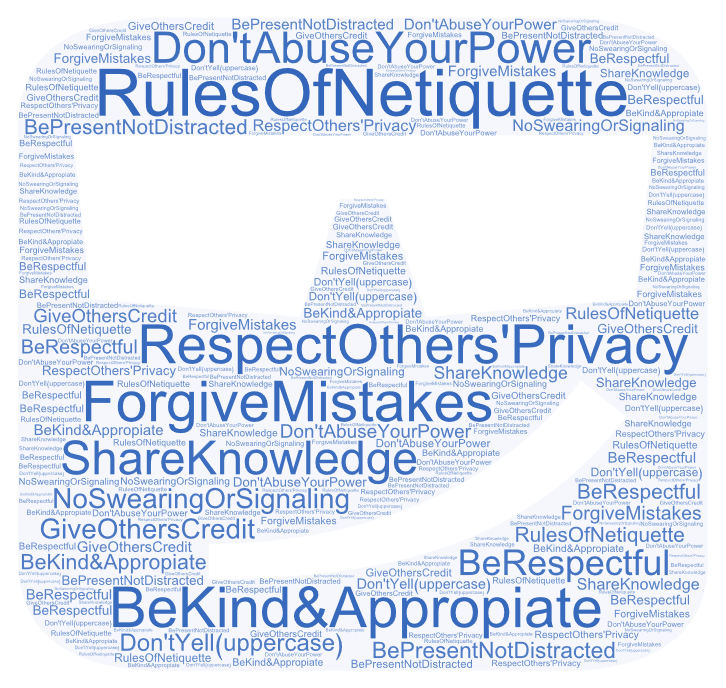 Netiquette - the key to effective online communication